
Design bespoke peaks and valleys architectures delivering controlled micro-fields of 30-250 Gauss within millimeter-scale columns.
Maintain spatial containment below 5 Gauss immediately outside active regions.
Digital definition enables scalable production and application-specific optimization.
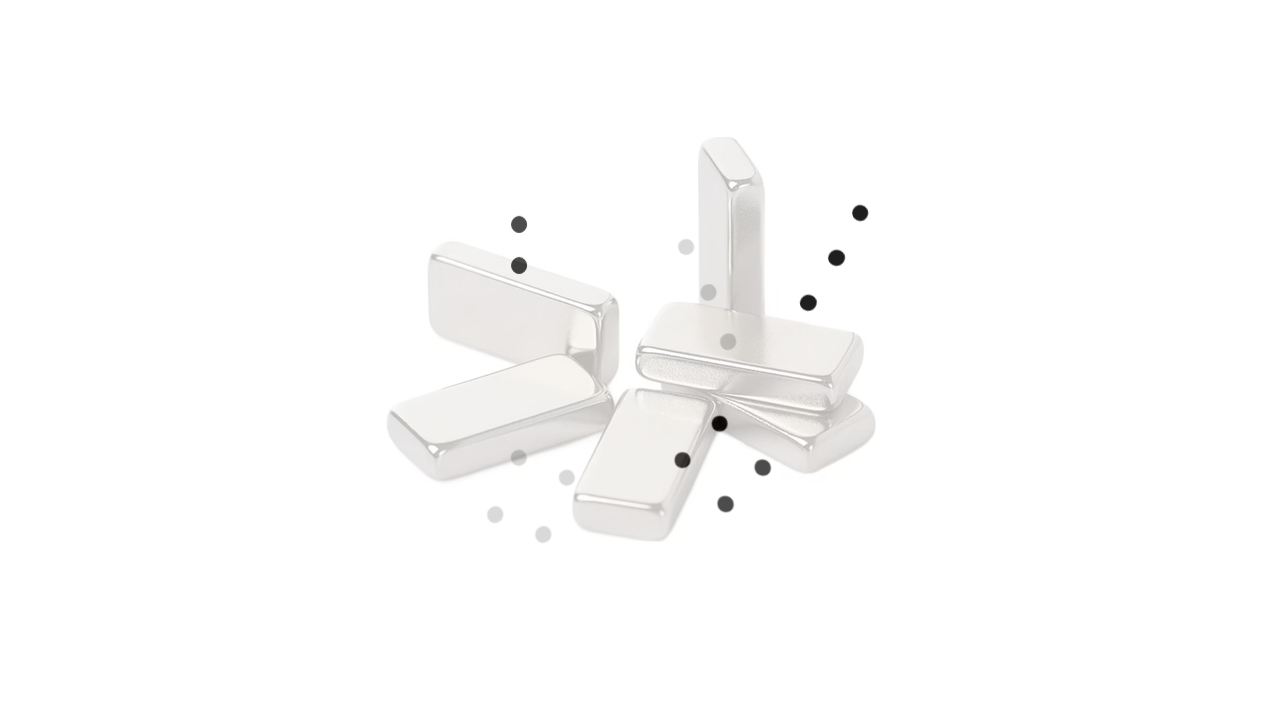
Why Pattern Magnetics: Unlike barcodes or RFID, custom magnetic pattern tiles function reliably in oil, dust, metal-rich environments, underwater, and high-EMI areas without signal degradation or line-of-sight requirements.
Why Pattern Magnetics: RFID performance detunes near metal; magnetic stripe requires protected surfaces. Custom magnetic patterns operate directly on metal housings without RF interference or shielding constraints.
Why Pattern Magnetics: Physical disturbance alters magnetic geometry, making replication or resealing far more difficult than replacing holographic labels or serialized stickers.
Why Pattern Magnetics: Magnetic patterns embedded in fixtures can validate correct tool or part placement without optical alignment or camera calibration, reducing downtime and contamination sensitivity.
Why Pattern Magnetics: Unlike optical markers, magnetic fiducials operate in smoke, debris, or low-light factory conditions and cannot be visually obscured or misread by glare.
Why Pattern Magnetics: Magnetic geometry is volumetric and difficult to replicate without material composition knowledge, exceeding the security of printed QR codes or surface-applied tags.
Why Pattern Magnetics: Provides a portable, power-free spatial magnetic reference pattern, eliminating the need for energized Helmholtz coil systems in field calibration.
Why Pattern Magnetics: Encoded magnetic patterns can verify component compatibility before mechanical engagement, reducing reliance on fragile electrical interlocks or keyed connectors.
Why Pattern Magnetics: Resistant to abrasion and chemical exposure, Custom magnetic encoding remains functional where paint markings and adhesive labels fail.
Why Pattern Magnetics: Pre-programmed magnetic regions can represent configuration states or production stages and be verified with simple Hall sensors, without requiring powered electronics or network connectivity.